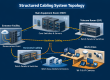
Almost every office has the same meeting-room story: ten minutes of the meeting go to finding the right cable, fixing the screen, or waiting for the video call to connect. Rooms that work every time are not about expensive gear. They are about planning the cabling, network, and power before the equipment goes in.
What a Modern Meeting Room Needs
- One or more displays, wall mounted or on a cart, with power and video connections behind them.
- A camera, microphones, and speakers sized for the room, so remote participants can see and hear everyone.
- A table connection point, such as a floor box or table box with power, network, and video inputs for laptops.
- Wired network connections to the video equipment and room controller. Video calls are more reliable on cable than on Wi-Fi.
- Wireless sharing, so guests can present without plugging in.
- A room scheduling panel outside the door, if you use one.
- Good Wi-Fi coverage for everyone’s laptops and phones. See why Wi-Fi has dead spots.
Cabling to Plan Before the Walls Close
- Network drops behind each display, at the table, at the camera location, and for any scheduling panel. Add spares.
- Video cabling or conduit between the table and the displays, so you can add or change equipment later without opening walls.
- Power outlets at each display, at the table, and near any equipment cabinet or credenza.
- Ceiling cabling for ceiling microphones, speakers, and any camera mounted overhead.
- Quality cable, such as Cat6 or Cat6A, tested and labeled. See Cat6 vs. Cat6A vs. fiber and cable testing and certification.
- PoE switch capacity for cameras and devices that draw power from the network. See our PoE guide.
Network Considerations
- Internet upload speed. Video calls use sustained bandwidth in both directions. With several rooms in use, the total adds up. See choosing business internet.
- Quality of service, so calls take priority over large downloads. See what your network needs for VoIP.
- Guest access, so visitors can connect without reaching your internal network. See network segmentation.
- Security for room devices. Cameras, panels, and conferencing systems are network devices. Change default passwords and keep firmware updated. See signs your network needs a security review.
- Privacy. Be thoughtful about room cameras and microphones, and make clear when they are on.
Common Mistakes
- Putting the only network drop on the far wall from where the equipment ends up.
- Skipping the table connection point, so cables run across the floor.
- Choosing equipment first and discovering the room has no power or cabling where it needs to go.
- Forgetting acoustics. Hard surfaces and noisy air vents ruin audio, and no microphone fixes that fully.
- No documentation, so nobody knows how the room is wired. See cable labeling and organization.
Planning a new office or remodel? Include meeting rooms in your low-voltage plan from the start. See our low-voltage planning checklist.
Building Meeting Rooms That Work?
Scio Info Tech installs the cabling, networks, and Wi-Fi behind reliable meeting rooms for businesses across California. Send us your floor plan and we will plan the infrastructure.