Your internet connection is the front door to everything your business does online: cloud software, video calls, phones, payments, and cameras. Yet many businesses pick a plan by price alone and discover the limits later. This guide explains the main business internet options and what to ask before you sign a contract.
The Main Types of Business Internet
Fiber
Data travels as light through glass strands. Fiber typically offers the highest speeds, low delay (latency), and often the same speed for upload as for download (symmetrical). That matters for video calls, cloud backups, VoIP, and cameras uploading video. The catch is availability: fiber is not available at every address, and new installations can take time.
Cable
Delivered over the same coaxial network as cable TV. It is widely available, often affordable, and fast for downloads. Upload speeds are usually much lower than download speeds, and the connection is shared with neighbors, so speeds can dip at busy times.
Fixed Wireless and Business 5G
Internet delivered by radio to an antenna at your building. It can be a quick option where cable and fiber are not available, and it works well as a backup line. Performance depends on signal strength, distance, and congestion, so results vary more than with fiber.
Other Options
DSL and Ethernet-over-copper still exist in some areas and are generally slower. Satellite can serve remote locations but has higher delay, which affects calls and some applications.
Dedicated vs. Broadband
Providers sell two broad categories of service. Broadband is shared and priced for value, typically “best effort” with no guaranteed speed. Dedicated internet access (DIA) gives you a line reserved for your business, with guaranteed speeds and a service level agreement (SLA) that sets targets for uptime and repair times. Dedicated service costs more, but it can be worth it when downtime is expensive or you host services, run many phones, or depend on cloud applications all day.
How Much Speed Do You Need?
Add up what runs at the same time during your busiest hour:
- Number of employees and devices online.
- Video meetings, which use sustained bandwidth in both directions.
- VoIP phones. See what your network needs for VoIP.
- Cloud backups, file sync, and large uploads.
- Security cameras uploading to the cloud or viewed remotely. See camera storage options.
- Guest Wi-Fi and customer-facing systems.
Pay special attention to upload speed, which is the figure most often overlooked and the one that limits calls, backups, and cameras.
Add a Backup Connection
Even the best provider has outages, and a single dug-up cable can take a whole neighborhood offline. A second connection, ideally from a different provider using a different technology, keeps you running. A common setup is fiber or cable as the main line and 5G or fixed wireless as automatic failover. A router that supports failover switches over without anyone touching it. Put the router and modem on a battery backup too. See our network closet checklist.
Questions to Ask Providers
- What speeds do you guarantee, both download and upload, at my address?
- Is this a dedicated or shared connection, and is there an SLA?
- What is the installation timeline, and are there construction or extra installation costs?
- How long is the contract, and what are early-termination fees?
- Are static IP addresses available, and at what cost?
- What are the data limits, if any, and what happens when I exceed them?
- What is your support process, and do I get a business-level repair priority?
- Where does the line enter my building, and what equipment will you install?
Don’t Forget the Inside of Your Building
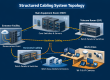
A fast connection at the street does you no good if your internal cabling and network cannot carry it. Where the provider’s line enters, how it reaches your network room, and what cable runs to your equipment all affect performance. Old cabling can quietly cap your speeds. See whether to replace old network cabling. If you are moving, order internet service first, because it is often the longest wait. See our office move checklist.
Make Sure Your Network Can Use What You Pay For
Scio Info Tech designs the cabling, networks, and failover setups behind reliable business internet across the San Francisco Bay Area, Sacramento, Los Angeles, and California. Tell us about your site and we will help you plan it.