
Structured Cabling Systems: The Definitive Guide for Modern Network Infrastructure
Introduction
In today’s hyper-connected digital economy, structured cabling systems are the backbone of enterprise communications — supporting voice, data, video, security, cloud connectivity, and Internet of Things (IoT) technologies. A properly engineered structured cabling infrastructure delivers unparalleled performance, scalability, reliability, and future-proofing for any organization ranging from small businesses to large enterprises.
This guide provides a detailed, multi-section breakdown of structured cabling systems, their components, design standards, best practices, benefits, and implementation considerations — written to rank highly in search results and drive organic traffic through clear, authoritative content.
⸻
What Is Structured Cabling?
Structured cabling refers to a standardized system of cabling and associated hardware that provides a comprehensive telecommunications infrastructure. It is designed to support multiple hardware uses and be flexible enough to accommodate future changes.
Unlike point-to-point cabling, which connects individual devices directly to network equipment, structured cabling uses a hierarchical topology with standardized pathways and components. This approach simplifies management, enhances performance, and minimizes downtime.
Key Features:
• Standardized design and installation
• Modular and scalable architecture
• Supports multiple services (voice, data, video)
• Meets industry standards for performance and safety
⸻
Why Structured Cabling Matters for Modern Businesses
Structured cabling is critical to the growing demand for high-speed networks, cloud computing, remote operations, and digital collaboration tools. It directly affects network performance, uptime, manageability, and total cost of ownership.
Core Business Benefits:
• Improved Network Performance: Reduces latency and interference
• Scalability: Easily expands as an organization grows
• Reduced Downtime: Easier maintenance and troubleshooting
• Cost Efficiency: Lower operational costs than point-to-point systems
• Future-Proofing: Supports emerging technologies and higher bandwidths
⸻
Key Components of a Structured Cabling System
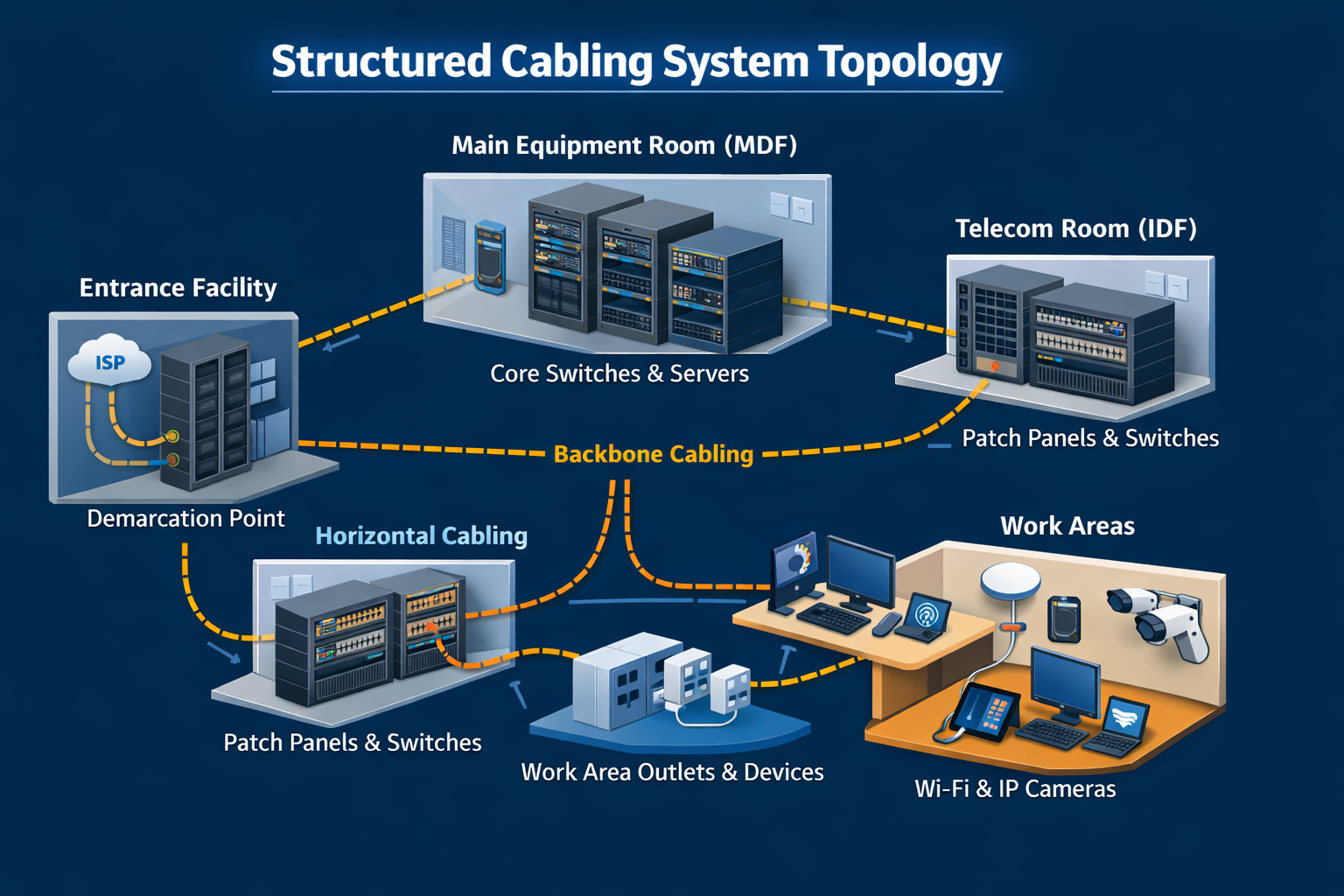
Structured cabling consists of standardized subsystems and components. Each plays a specific role in the connectivity ecosystem.
1. Entrance Facilities
The point where external service provider cabling connects to internal infrastructure. Includes:
• Demarcation points
• Conduits and pathways
• Network interface devices
2. Equipment Rooms
Central locations housing equipment such as:
• Routers
• Switches
• Servers
• Patch panels
These rooms are designed for efficient airflow, power distribution, and cable management.
3. Telecommunications Rooms (TRs)
Also known as intermediate distribution frames (IDFs), TRs serve specific building zones:
• Termination points for backbone and horizontal cabling
• Patch panels and crossconnects
4. Backbone Cabling
Vertical cabling that connects TRs, equipment rooms, and entrance facilities. Backbone cabling may consist of:
• Fiber optic cables (single-mode or multimode)
• High-capacity copper cabling (for shorter distances)
• Conduits and pathways
5. Horizontal Cabling
Runs from TRs to individual work areas containing:
• Ethernet cabling (Cat5e, Cat6, Cat6a, Cat8)
• Patch cords
• Work area outlets
Horizontal cabling is designed to support endpoint devices such as computers, phones, Wi-Fi access points, and printers.
6. Work Area Components
The final connection point in structured cabling:
• Wall outlets and jacks
• Patch cords
• Device connections
⸻
Standards & Best Practices
Structured cabling is governed by international and industry standards to ensure performance, compatibility, and safety.
Key Standards:
• TIA/EIA-568 Series: Defines commercial cabling specifications
• ISO/IEC 11801: International standard for cabling systems
• NEC & Local Building Codes: Safety and fire regulations
• IEEE Network Protocol Standards: Defines data communication protocols
Adherence to standards ensures:
• Consistent performance across installations
• Interoperability between vendors and products
• Compliance with safety and regulatory requirements
⸻
Types of Cabling Used
Copper Cabling
• Cat5e: Up to 1 Gbps
• Cat6: Up to 10 Gbps (short distances)
• Cat6a: Up to 10 Gbps with improved noise resistance
• Cat8: Up to 40 Gbps (data center applications)
Copper is cost-effective and sufficient for many enterprise environments.
Fiber Optic Cabling
• Single-mode fiber: Long-distance, high-speed backbone cabling
• Multimode fiber: Shorter runs within buildings
Fiber offers higher bandwidth and immunity to electromagnetic interference (EMI).
⸻
Design Principles for Structured Cabling
1. Scalability
Design with future expansion in mind. Use modular components and pathways that allow easy additions or upgrades.
2. Redundancy
Implement redundant backbone paths to reduce single points of failure.
3. Proper Labeling
Every cable, patch panel port, and jack should be systematically labeled for easier maintenance.
4. Cable Management
Use racks, trays, and ties to prevent cable damage and airflow obstruction.
5. Documentation
Maintain up-to-date schematics, port maps, and test records for troubleshooting and compliance.
⸻
Structured Cabling Installation Best Practices
Professional installation is essential for performance and compliance.
Steps Include:
1. Site survey and needs assessment
2. Pathway design (conduits, trays, access points)
3. Cable selection and testing criteria
4. Installation and termination
5. Testing and certification
6. Documentation handoff
Use certified installers and testing tools to validate performance against standards.
⸻
Common Challenges & Solutions
Challenge Solution
Signal Interference Use proper shielding and separation from electrical lines
Cable Congestion Plan pathways and use high-density solutions
Future Bandwidth Needs Install higher-capacity media (e.g., fiber)
Poor Documentation Implement structured labeling and digital records
Emerging Trends in Structured Cabling
Higher Bandwidth Requirements
Driven by:
• 5G networks
• IoT devices
• Cloud computing
• Video conferencing
AI & Smart Infrastructure
Network monitoring tools use AI for predictive maintenance.
Convergence of Services
One cabling system supporting:
• Voice
• Data
• Security
• Building automation systems
⸻
Conclusion
Structured cabling is more than just wires and connectors — it is a strategic investment in a business’s operational efficiency, flexibility, and future growth. Whether designing a new facility or upgrading an existing network, a well-engineered structured cabling system delivers performance, scalability, and cost savings that directly impact productivity and competitive advantage.
⸻
SEO Optimization Notes (for your CMS)
Primary Keywords to Target
• structured cabling systems
• what is structured cabling
• network infrastructure cabling
• structured cabling standards
• fiber vs copper cabling
• structured cabling benefits
Secondary & Supporting Keywords
• Ethernet cabling types (Cat5e, Cat6, Cat6a, Cat8)
• backbone cabling
• horizontal cabling
• TIA/EIA standards
• data center cabling best practices
• cable management solutions
Content Enhancements for SEO
✅ Use keyword variations naturally in headings and body text
✅ Add internal links to related pages (services, case studies, whitepapers)
✅ Include visual diagrams (cabling topology, component breakdown)
✅ Add FAQs with target long-tail queries
✅ Ensure mobile optimization and fast load times